Best Balance Pads for Seniors
As an Amazon Associate, I earn from qualifying purchases.
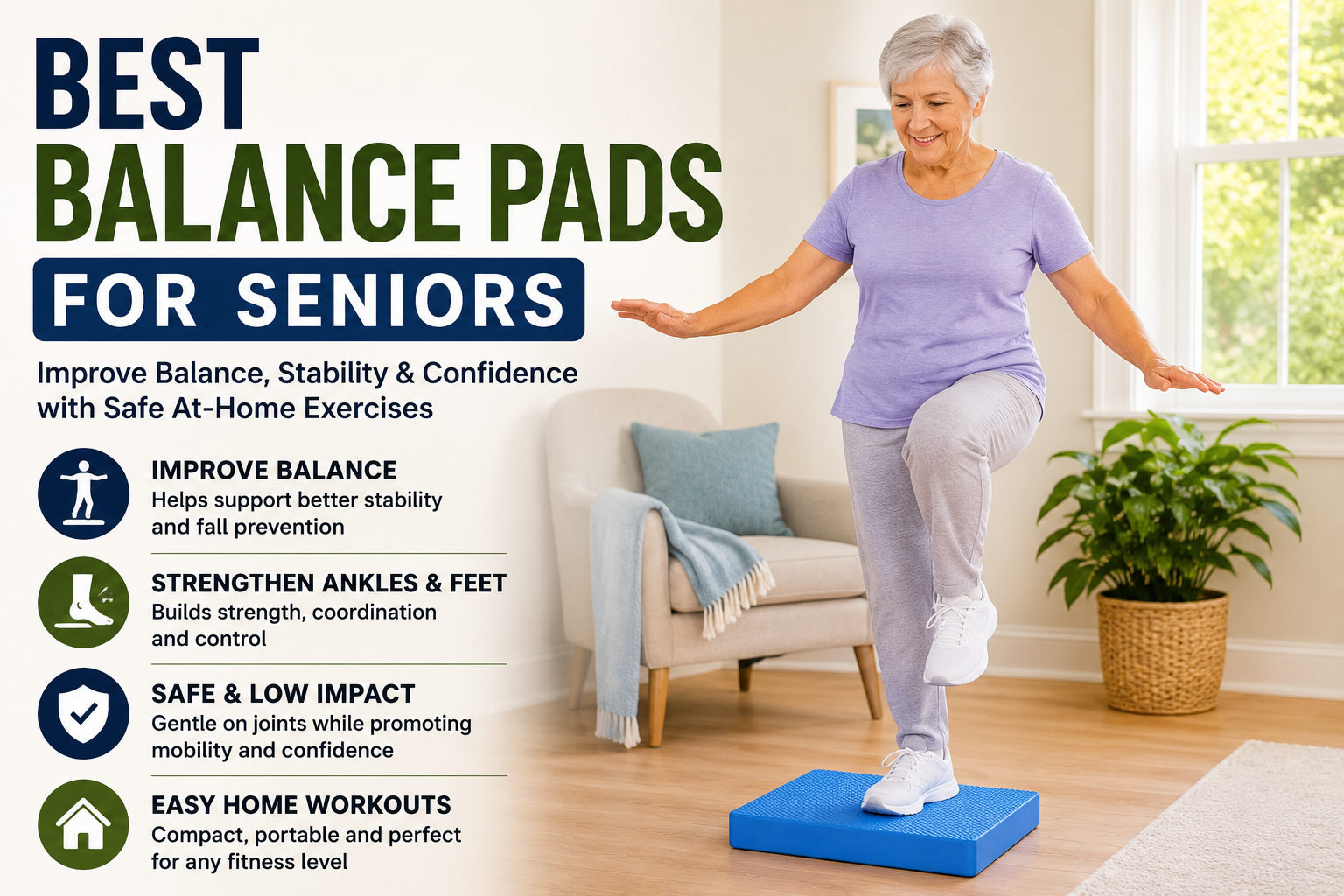
A balance pad can help seniors practice gentle stability exercises at home. These soft foam pads create a slightly unstable surface, which can help with balance training, ankle stability, foot strength, coordination, and physical therapy-style exercises.
The best balance pads for seniors should be non-slip, comfortable, easy to step on, and not too advanced for the user’s ability. Balance pads can be useful for some older adults, but they should be used carefully because standing on an unstable surface can increase fall risk if the senior is not ready.
Balance pads also fit well with other senior exercise and therapy tools. You may also want to see our guides to best chair exercise equipment for seniors, best pedal exercisers for seniors, best ankle and wrist weights for seniors, and best hand exercisers for seniors with arthritis.
Quick Picks: Best Balance Pads for Seniors
| Product | Best For | Type |
|---|---|---|
| Vive Balance Pad | Best overall | Foam balance pad |
| StrongTek Professional Foam Balance Pad | Best non-slip option | High-density foam balance pad |
| Yes4All Balance Pad | Best value option | TPE foam balance pad |
| THERABAND Stability Trainer Pad | Best therapy-style option | Physical therapy stability pad |
| AIREX Balance Pad | Best premium option | Premium foam balance pad |
Best Overall: Vive Balance Pad
The Vive Balance Pad is a good overall choice for seniors who want a foam balance pad for gentle stability exercises, rehab-style movements, and balance practice at home.
This type of pad can be used for standing balance work, seated foot exercises, knee support during floor exercises, or gentle physical therapy-style routines. For seniors, the most important thing is to start slowly and use support nearby, such as a counter, sturdy chair, or caregiver assistance.
The Vive balance pad is a practical option for seniors who want one simple balance pad instead of a complicated balance board.
Best for: Seniors who want a general-purpose foam balance pad.
Why seniors may like it:
- Simple foam pad design
- Useful for balance and stability exercises
- Can be used for ankle, foot, and core exercises
- Good for home exercise or therapy-style routines
- Less intimidating than a wobble board
Potential downside: Seniors with poor balance should not stand on it without support or professional guidance.
Best Non-Slip Option: StrongTek Professional Foam Balance Pad
The StrongTek Professional Foam Balance Pad is a good option for seniors who want a high-density foam pad with a non-slip surface. It is designed for balance training, physical therapy, yoga, stability work, and rehab-style exercises.
This may be helpful for seniors who want a pad that feels supportive but still creates enough instability for gentle balance practice. A non-slip surface is important because seniors need as much traction and control as possible during balance exercises.
Best for: Seniors who want a non-slip foam balance pad for home therapy-style exercise.
Why seniors may like it:
- High-density foam design
- Non-slip surface
- Useful for balance and stability training
- Good for gentle rehab-style movement
- Can also be used as a knee pad for floor exercises
Potential downside: Even with a non-slip surface, balance pads still create instability and should be used carefully.
Best Value Option: Yes4All Balance Pad
The Yes4All Balance Pad is a good value option for seniors who want a basic foam balance pad for light exercise, stability training, and physical therapy-style movements.
Balance pads like this can be used for standing exercises, seated foot work, gentle ankle stability drills, and beginner balance training. Seniors should always start near something sturdy they can hold onto.
This may be a good choice for seniors who want a simple balance pad without paying for a premium physical therapy brand.
Best for: Seniors who want an affordable balance pad for basic home use.
Why seniors may like it:
- Simple foam balance pad
- Good for beginner balance exercises
- Useful for ankle and foot stability work
- Can support gentle home workouts
- Often available in several sizes and colors
Potential downside: Some seniors may need a firmer or more therapy-focused pad depending on their balance level.
Best Therapy-Style Option: THERABAND Stability Trainer Pad
The THERABAND Stability Trainer Pad is a therapy-style option that may be useful for seniors doing physical therapy, balance work, or controlled stability exercises.
THERABAND stability trainer pads come in different firmness levels, which can be helpful because not every senior needs the same difficulty. A firmer beginner pad may be better for someone just starting, while softer pads are usually more challenging.
This can be a good choice for seniors who are following a therapist’s recommendation or want a balance pad from a therapy-focused brand.
Best for: Seniors who want a therapy-style balance pad.
Why seniors may like it:
- Therapy-focused brand
- Available in different firmness levels
- Useful for balance and stability training
- Good for controlled physical therapy-style exercises
- Compact and easy to store
Potential downside: Choose the correct firmness level. A pad that is too soft may be too difficult for some seniors.
Best Premium Option: AIREX Balance Pad
The AIREX Balance Pad is a premium foam balance pad often used for balance training, rehab exercises, stretching, and physical therapy-style movement.
This may be a good option for seniors who want a higher-quality pad and are willing to pay more for it. A premium pad may be useful for a senior who will use it regularly as part of a therapy or exercise routine.
For seniors, this type of pad should still be used carefully. Premium does not mean safer if the user has poor balance or stands on it without support.
Best for: Seniors who want a premium balance pad for regular use.
Why seniors may like it:
- Premium foam balance pad
- Used for balance, stretching, and rehab-style exercises
- Good for regular home exercise routines
- Comfortable surface
- Useful for seniors working with a therapist or trainer
Potential downside: It costs more than many basic foam balance pads.
What Is a Balance Pad?
A balance pad is a soft foam pad used for stability exercises, physical therapy, rehab-style movement, yoga, stretching, and balance practice. The foam surface creates a slightly unstable base, which makes the feet, ankles, legs, and core work harder to stay steady.
For seniors, balance pads should be used carefully. They can be helpful for some people, but they can also increase fall risk if used too soon or without support.
Who Should Consider a Balance Pad?
A balance pad may be helpful for seniors who:
- Want gentle balance practice
- Are working on ankle stability
- Need physical therapy-style exercises
- Want to strengthen feet and ankles
- Need a soft surface for seated foot exercises
- Are working with a therapist or trainer
- Want a simple home exercise tool
If the senior has a high fall risk, poor balance, dizziness, recent falls, or recent surgery, ask a doctor or physical therapist before using a balance pad.
Who Should Be Careful with Balance Pads?
Balance pads are not right for every senior. Be careful if the senior has:
- High fall risk
- Dizziness
- Vertigo
- Severe balance problems
- Recent falls
- Unstable walking
- Severe leg weakness
- Recent hip, knee, ankle, or back surgery
- Pain that gets worse with standing exercises
If there is any doubt, start with safer seated options like chair exercise equipment or ask a healthcare professional first.
How to Choose the Best Balance Pad for Seniors
Choose the Right Firmness
Firmer pads are usually easier. Softer pads create more instability and may be harder for beginners.
Look for a Non-Slip Surface
A textured or non-slip surface can help reduce sliding. Seniors should still use the pad on a safe, flat floor.
Pick the Right Size
A larger pad gives more standing room. A smaller pad may be easier to store but gives less foot space.
Use Support Nearby
Seniors should use a counter, sturdy chair, wall, rail, or caregiver support when first using a balance pad.
Start with Seated Exercises
Some seniors can begin by placing the feet on the balance pad while seated. This is usually safer than standing on it right away.
Avoid Advanced Exercises at First
Single-leg stands, eyes-closed exercises, squats, and lunges may be too advanced for many seniors. Start simple.
Safety Tips for Seniors Using Balance Pads
- Use the pad on a flat, dry floor.
- Keep a sturdy support nearby.
- Do not use a balance pad near stairs.
- Start with very short sessions.
- Wear supportive shoes if recommended.
- Do not stand on the pad if dizzy or unsteady.
- Stop if there is pain, dizziness, or loss of balance.
- Ask a physical therapist if unsure how to use it safely.
Balance Pad vs. Balance Board
A balance pad is a soft foam pad that creates gentle instability.
A balance board usually rocks, tilts, or rolls more aggressively. Balance boards are often harder and riskier for seniors.
For most seniors, a balance pad is a better starting point than a balance board. It is still challenging, but usually less intimidating and easier to control.
Best Overall Pick
For most seniors, the Vive Balance Pad is a good place to start because it is simple, practical, and designed for balance, physical therapy, and stability exercises.
If the senior wants a non-slip high-density option, the StrongTek Professional Foam Balance Pad is worth considering. If the senior is following therapy exercises, the THERABAND Stability Trainer Pad or AIREX Balance Pad may be better choices.
Related Senior Exercise and Therapy Guides
- Best Chair Exercise Equipment for Seniors
- Best Pedal Exercisers for Seniors
- Best Ankle and Wrist Weights for Seniors
- Best Hand Exercisers for Seniors with Arthritis
- Best Transfer Boards and Transfer Aids for Seniors
- Best Rollator Walkers for Seniors
Frequently Asked Questions
What is the best balance pad for seniors?
The best balance pad for most seniors is firm enough to feel controlled, large enough for safe foot placement, and easy to use near a sturdy support. The Vive Balance Pad is a good general option.
Are balance pads good for seniors?
Balance pads can be useful for some seniors, especially for gentle balance and stability exercises. However, they can increase fall risk if used incorrectly, so seniors should start carefully.
Are balance pads safer than balance boards?
For many seniors, balance pads are usually safer and easier than balance boards. Balance boards move more aggressively and may be too difficult for older adults with balance concerns.
Should seniors use a balance pad while standing?
Only if they can do so safely. Many seniors should start with seated foot exercises or use a counter, sturdy chair, or therapist support when standing on a balance pad.
Can a balance pad help ankle strength?
Balance pads may help some people work on ankle stability and foot control. Seniors with ankle injuries or pain should ask a physical therapist before using one.
What other exercise tools help seniors?
Helpful tools include chair exercise equipment, pedal exercisers, hand exercisers, ankle and wrist weights, resistance tools, and mobility supports like rollator walkers.
Final Thoughts
The best balance pads for seniors can support gentle stability training, ankle exercises, foot strength, and physical therapy-style movement at home. They are simple tools, but they should be used carefully because unstable surfaces can increase fall risk.
For most seniors, start with a firm, non-slip balance pad and use support nearby. Avoid advanced exercises until the senior is ready. Seniors with poor balance, dizziness, recent falls, or recent surgery should ask a doctor or physical therapist before using a balance pad.
Before buying, think about the senior’s balance level, fall risk, therapy needs, pad firmness, available support, and whether a safer seated exercise tool would be better.